We continued to enjoy the desert ... this area of the Negev is where a lot of the stuff in the Bible happened. The landscapes are so spectacular that it's easier to understand why the language the Bible uses is that of hyperbole. Our next stop on the tourist trail was the Hai Bar Wild Animal and Nature Reserve -- here are some links: http://en.wikipedia.org/wiki/Yotvata_Hai-Bar_Nature_Reserve, and http://redseadesert.com/html/060haibar.html. Endangered and extinct animals mentioned in the Bible are bred here for possible reintroduction to the Negev desert. There's an area where you can view noctural animals, another one to see Israeli birds of prey, and the main area where you drive through with your car and the wildlife roams free. Pretty cool! We saw lots of Arabian oryx, some Somali Wild Ass, lots of Nubian Ibex, and a ton of ostriches!!! And the ostriches were so bold that they waddled right up to the car and started tapping on my driver's side window with their beaks!! So I'll have some extreme close up photos to show :) They were literally seeing eye to eye with me :) Don't know why I have this Dr. Doolittle thing going on but it sure is fun!           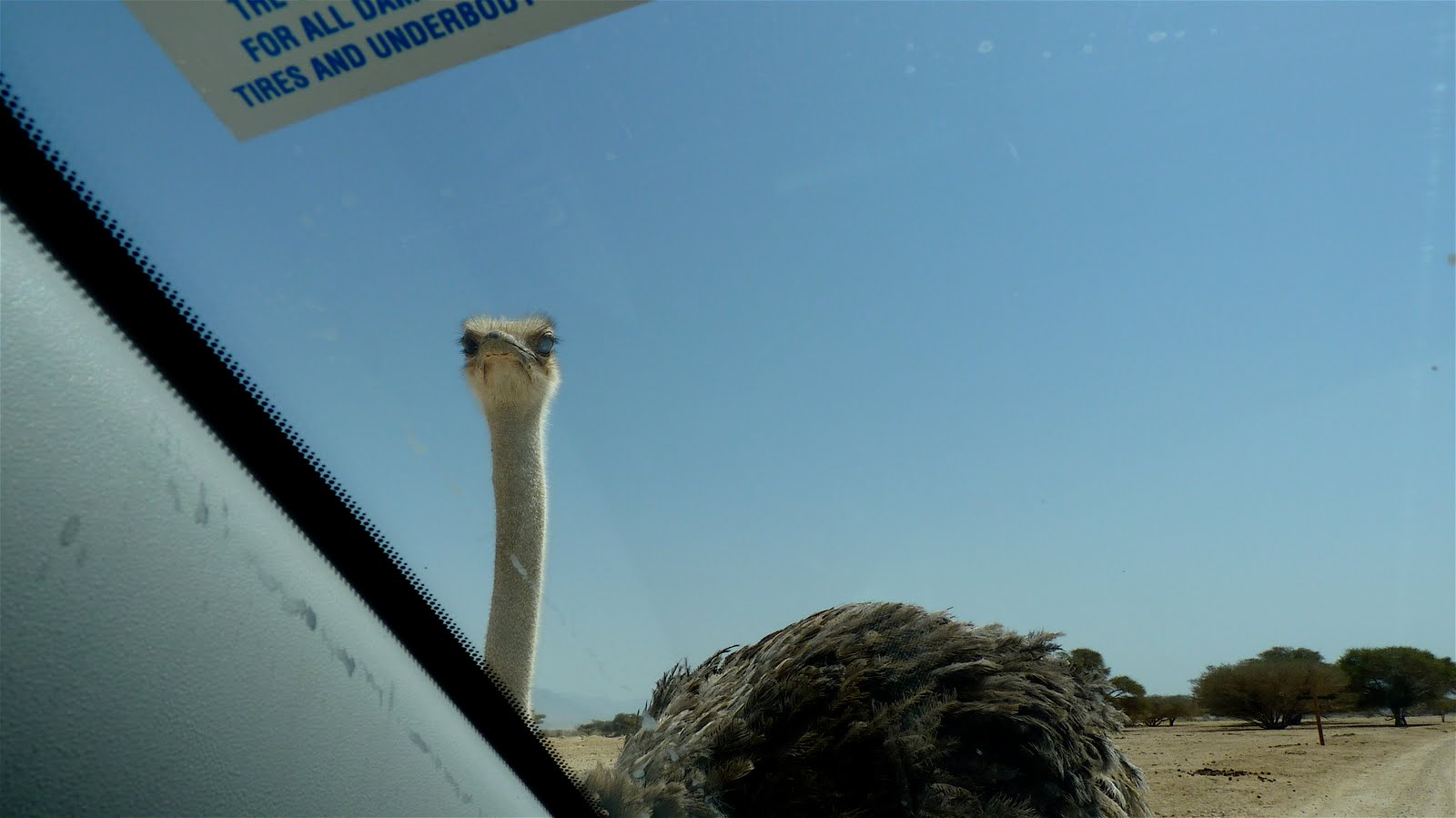     Our next stop was the incredible Timna Valley Park -- see this link: http://en.wikipedia.org/wiki/Timna_Valley_Park. This is an area of much history made into another national park ... there are 9 km of driving trails and then many many different sites that you can explore by foot. It features amazing sandstone formations, nicknamed "the mushroom", "the mushroom and a half", "the arches", some copper mines dating back 6000 years with ancient tools found as well (everything in Israel turns out to be archaeological), King Solomon's pillars (which actually have nothing to do with King Solomon, but the name stuck, and I got to climb around there with a German tour group and then exit through a shrine to Hathor, the female Egyptian goddess of mining. They also had built a life-size replica of the biblical tabernacle, which was described in exact dimensions and such in the Bible, kinda interesting to see... It's too bad it was about 100 degrees that day (38+ for you Celsius fans)!                The following day we left for the hmmmm... not greener, but wetter pastures of Eilat, which is just a half hour south and on the very very southern tip of Israel at the Red Sea. (http://en.wikipedia.org/wiki/Eilat). Israel is incredibly narrow at that point of the triangle and therefore very very close to land borders with both Jordan, to the East, and Egypt, to the west. Luckily these are fairly friendly borders. The Red Sea, of course, is a misnomer. For more on that see http://en.wikipedia.org/wiki/Red_sea. It's not red. Also, in Hebrew it's not called that -- it's Yam Soof, which I have to assume meant that they thought it was the sea at the end of their world. This is also the sea that parted in half during the Biblical escape of the Jews from Egypt. In order to observe this phenomenon, my mom and I took a little boat trip with a company called Yam Yisrael -- they have glass bottomed boats with a few decks where they go from Eilat to the edge of both Jordanian and Egyptian borders, and back. It passed an area called "Dolphin Cove" where you can see dolphins surfacing, for some reason they especially like that area though they are not contained there (free food? ;) You can see all sorts of amazing sea life through the glass bottomed area, and coral, especially in one area that I have not been able to figure out why they call "the Japanese Garden". Most of the other passengers on the boat were Arab or Russian. The boat people turned up some catchy Arabic music and the Arabs entertained themselves and others with some inspired dancing. The Russians didn't do much to entertain -- there being no vodka around. Anyway, folks, I have to tell you, the Red Sea did not part AT ALL during our little boat trip, tragically. I asked for a refund but those folks have no sense of humor! ;-)           Later that evening we went on a search from our hostel to find Eddie's Hideaway, an aptly named restaurant which was really just a block or two from the hostel and featured delicious fish and seafood, apparently owned by an American. Because it was so hidden away down an alley which emptied into a courtyard, it was just us and a large number of locals who all know about it, but no identifiable other tourists. Very nice :) They feature denis, which is also known as sea bream and local to that area. The next morning we got up super early and went to the Coral Beach Nature Reserve (http://www.parks.org.il/BuildaGate5/general2/data_card.php?Cat=~25~~410455042) and I got to go snorkeling there and it was AMAZING. I'd say the fishies and coral in Malaysia in the Perhentian Islands which I went to 8 months ago were even more amazing, but this was pretty cool indeed! I loved floating past all that color and sea life.     Just sorry I couldn't do it for longer -- but we had to move on to the incredible Underwater Observatory (http://www.coralworld.com/eilat/eng/) where there are terrific and beautiful tanks of unusual fish but also a large area where you descend into the ocean inside this building and get to see the sea life all around you through windows without getting wet. They also have tortoises, a shark tank where we got to see the feeding, a small Amazon section, and very lovely and patient staff who go through all sorts of interesting information and explanations in both Hebrew and English. As a result I got to learn more words I never learned in bilingual school, important words like anemone שושנת-ים, shark כריש, fins סנפירים, etc. I had so much fun I didn't want to leave!              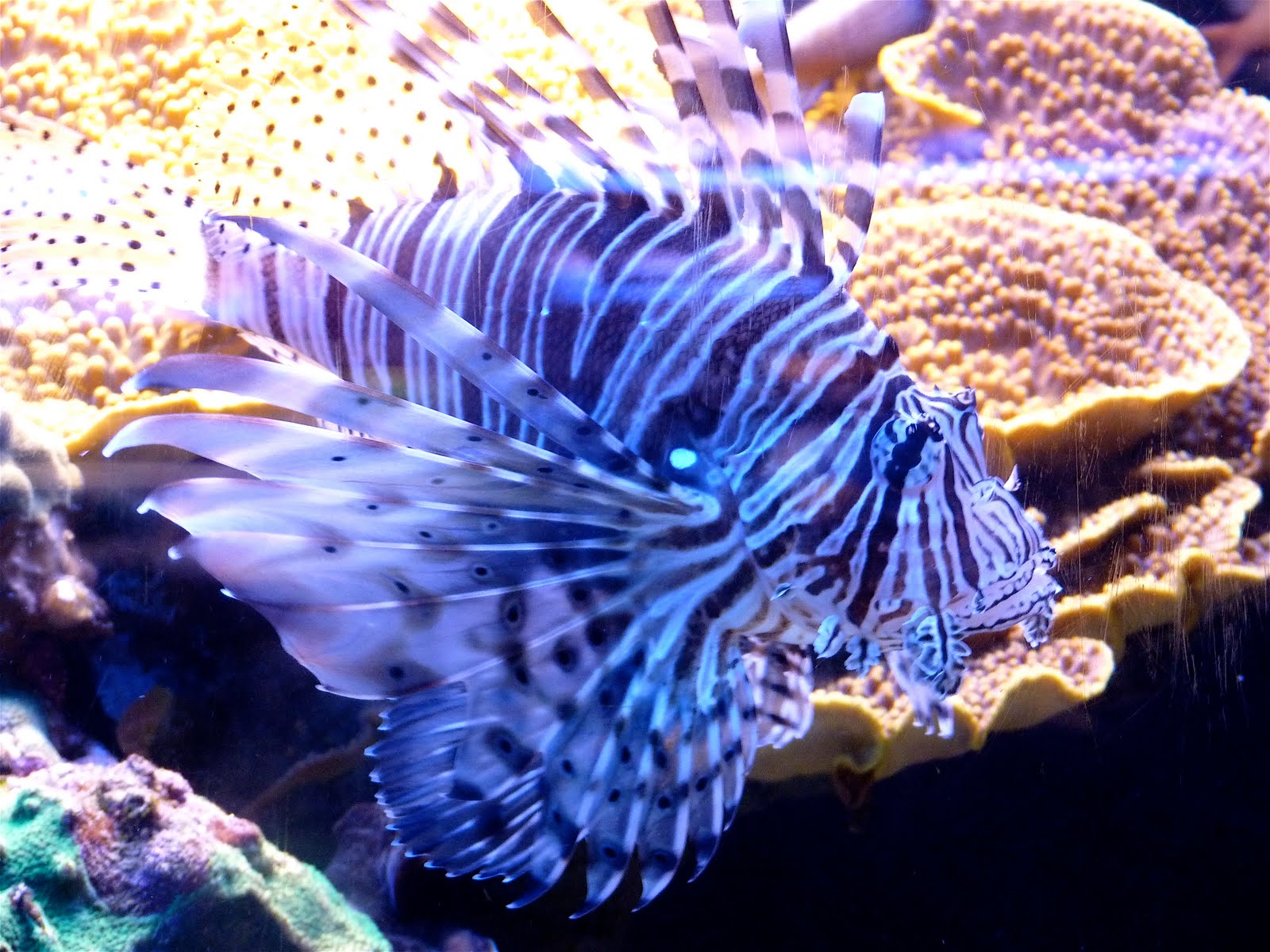              But we had to move on, from the Red Sea to the Dead Sea (I think it was called that because no life could exist there, it's 10x more salty than other oceans, but recently microbiologists have ruined all the fun with discovery of 11 bacterial species that can survive there -- but once again in Hebrew the name is more appropriately titled ים המלח or "Sea of Salt"). More on that in the next blog entry, but till then here's a link: http://en.wikipedia.org/wiki/Dead_sea Enjoy! |
Monday, May 3, 2010
Hai Bar, the spectacular Timna Valley and the underwater world of Eilat!


Sunday, May 2, 2010
Wandering in the Desert -- Ein Avdat, Mitzpeh Ramon, and Kibbutz Ketura in the Arava.
Sorry about no decent internet access for quite a while to post updates but I feel as though I've been here a really long time and done so much and at the same time it's not enough ;-)
So when last I left you, we were in the loving care of Iseec and his wife Leah. Iseec hand-delivered us to the Eldan car rental company the following morning, where we were delighted to discover that though I had booked a tin can car rental on the internet, instead I was given a Mazda 3, apparently the most popular car in Israel. I think Iseec had something to do with the upgrade, must have put in a good Sabra word for me ;-)
The nice Ethiopian guy who got my car for me was very apologetic having spent 10 minutes looking for a map for me in English but couldn't find one. Iseec told him it was no problem as I can read Hebrew. I too thought it was no problem, but later (of course) when I was asking my mom to help me with map reading it occurred to me that she can't read Hebrew! So driving at highway speed and reading a Hebrew map was a little much. I was lucky to be in the desert where the drivers are less ... Israeli, shall we say (by this I mean aggressive, tailgating, honking the horn if they think you're driving too slowly, passing you by going into the lane of oncoming traffic... -- actually very much like New York City).
So off we went, from Netanya south, farrrrrrrrrrrrrrrrr south, to Ein Avdat and Avdat -- a site where there was an ancient Nabatean civilization. Lots of very cool archeology to see but my mom got tired walking so I did a quick buzz through on my own.


There I happened to meet a woman who was a Black Hebrew who lived in the area --her family had immigrated to Israel from Chicago and she was born in Israel but spoke English with an African American accent though she has never been to the US. Apparently a community moved from the Midwest at some point in the past, including some relatives of Whitney Houston's. Hopefully they had a better outcome than she did, eh? We gave her this woman a lift to Mitzpeh Ramon which was our next stop. Here there is an incredible geological crater. I will try to put in some photos. I can't even begin to describe what this would resemble in the US? Maybe the Grand Canyon? Except of course I have never been to the Grand Canyon! Anyway it is quite impressive. We would have liked to go to Bio-Ramon, the sort of zoological park that goes with the crater visitor center, but ran out of time. At some point we bought one of those all-Israel National Park Passes which is priced pretty high at about US $35ish per person, but you can get into 63 different sites over a two week period and it was just easier than spending separate money each time.


From Mitzpeh Ramon we went on to where we were spending the night, Kibbutz Keturah in the Arava (an agricultural area within the Negev Desert). This Kibbutz was set up in the 1970s by North American immigrants. They had quite a nice B and B that we stayed at, and a gorgeous pool which unfortunately was only open between 3 and 6 pm so we missed out on that too. The following morning, a very nice guy named Mike who had lived there since the beginning gave us an incredible tour of the kibbutz and the experimental orchards and algae farming they have there. Most kibbutzim (which are collectives that are part agricultural/part industrial) have privatized in the last decade or two, but this one has not, meaning that no matter what a member does for a living, his/her salary goes to the group at large and everyone benefits or profits equally from the work of the group at large. Socialist, kinda. But the people are very happy there and they're doing well.


The two biggest moneymakers there are date orchards and algae farming. They produce medjool and deglet noor dates that are yummy, and they have an interesting understanding with the surrounding middle eastern countries -- they'll buy their products as long as there is no mention of the word "Israel" on it. So they market them as "Jordan River Valley Dates" with a mailing address that is a PO Box in Jericho (which is in the West Bank), and laugh all the way to the bank, and their neighbors get to eat the yummy dates they crave. The other business, the algae farming -- he told us all the scientific names which a week later I have since sadly forgotten but I will look up when I get home. They grow them in closed systems which use as little water and recycle as much as possible, given that they are in the desert, and these algae when fed to salmon first of all have major antioxidant properties, but also cause them to turn the lovely salmon pink color that makes people want to buy them instead of the gray color they otherwise would have been. Very high tech stuff. In the experimental orchard they are also growing various types of trees to determine what would be good to provide fodder for animals in Africa, and also spice trees and some acacia trees and lots lots more. The stay at the kibbutz was very comfortable, the only downside was the food is served in a dining hall and was less than inspired. We did pay a visit down the road to the Kibbutz Yotvata dairy, where they have very very fabulous (and pricey) ice cream.
Another comment on Israeli food -- they eat salads all day long. Including breakfast. The Israeli breakfast is kinda famous. Tons of really wonderful dairy products, salad salad salad, terrific bread, maybe some sour cherry jam, coffee. But not big on cereal, pastries, etc. And, no dessert even at dinnertime. No wonder they all look thin and healthy. The tomatoes and the avocadoes are supreme. At Shmuel's house we had an avocado that probably weighed almost a kilo. They dwarf anything sold in the US. Don't know how they do it.
Also at the kibbutz I bonded with the local cows. They are raised primarily for dairy and not for meat. They are black and white and cute all over. One night I drove in after a day out in the hot desert sightseeing (see the next entry) and decided for some reason looking at the cows that they would probably enjoy licking my salty arm. So I parked the car and stuck my arm into the pen and sure enough 5 cows lined up to get a piece of me. They would grab my whole hand into their mouths and suck on it! Their teeth aren't sharp so it wasn't a problem. For those of you who are thinking ewwwwwwwwwwww, why, that's gross -- actually their tongues have a nice consistency, kind of scratchy like a cat's tongue. I think if on my way back into the country I am asked if I did anything agricultural, I'm just gonna say "of course not" (and "please don't read my blog" ;-).

Next entry will discuss Timna Valley Park which was AMAZING!
So when last I left you, we were in the loving care of Iseec and his wife Leah. Iseec hand-delivered us to the Eldan car rental company the following morning, where we were delighted to discover that though I had booked a tin can car rental on the internet, instead I was given a Mazda 3, apparently the most popular car in Israel. I think Iseec had something to do with the upgrade, must have put in a good Sabra word for me ;-)
The nice Ethiopian guy who got my car for me was very apologetic having spent 10 minutes looking for a map for me in English but couldn't find one. Iseec told him it was no problem as I can read Hebrew. I too thought it was no problem, but later (of course) when I was asking my mom to help me with map reading it occurred to me that she can't read Hebrew! So driving at highway speed and reading a Hebrew map was a little much. I was lucky to be in the desert where the drivers are less ... Israeli, shall we say (by this I mean aggressive, tailgating, honking the horn if they think you're driving too slowly, passing you by going into the lane of oncoming traffic... -- actually very much like New York City).
So off we went, from Netanya south, farrrrrrrrrrrrrrrrr south, to Ein Avdat and Avdat -- a site where there was an ancient Nabatean civilization. Lots of very cool archeology to see but my mom got tired walking so I did a quick buzz through on my own.


There I happened to meet a woman who was a Black Hebrew who lived in the area --her family had immigrated to Israel from Chicago and she was born in Israel but spoke English with an African American accent though she has never been to the US. Apparently a community moved from the Midwest at some point in the past, including some relatives of Whitney Houston's. Hopefully they had a better outcome than she did, eh? We gave her this woman a lift to Mitzpeh Ramon which was our next stop. Here there is an incredible geological crater. I will try to put in some photos. I can't even begin to describe what this would resemble in the US? Maybe the Grand Canyon? Except of course I have never been to the Grand Canyon! Anyway it is quite impressive. We would have liked to go to Bio-Ramon, the sort of zoological park that goes with the crater visitor center, but ran out of time. At some point we bought one of those all-Israel National Park Passes which is priced pretty high at about US $35ish per person, but you can get into 63 different sites over a two week period and it was just easier than spending separate money each time.


From Mitzpeh Ramon we went on to where we were spending the night, Kibbutz Keturah in the Arava (an agricultural area within the Negev Desert). This Kibbutz was set up in the 1970s by North American immigrants. They had quite a nice B and B that we stayed at, and a gorgeous pool which unfortunately was only open between 3 and 6 pm so we missed out on that too. The following morning, a very nice guy named Mike who had lived there since the beginning gave us an incredible tour of the kibbutz and the experimental orchards and algae farming they have there. Most kibbutzim (which are collectives that are part agricultural/part industrial) have privatized in the last decade or two, but this one has not, meaning that no matter what a member does for a living, his/her salary goes to the group at large and everyone benefits or profits equally from the work of the group at large. Socialist, kinda. But the people are very happy there and they're doing well.


The two biggest moneymakers there are date orchards and algae farming. They produce medjool and deglet noor dates that are yummy, and they have an interesting understanding with the surrounding middle eastern countries -- they'll buy their products as long as there is no mention of the word "Israel" on it. So they market them as "Jordan River Valley Dates" with a mailing address that is a PO Box in Jericho (which is in the West Bank), and laugh all the way to the bank, and their neighbors get to eat the yummy dates they crave. The other business, the algae farming -- he told us all the scientific names which a week later I have since sadly forgotten but I will look up when I get home. They grow them in closed systems which use as little water and recycle as much as possible, given that they are in the desert, and these algae when fed to salmon first of all have major antioxidant properties, but also cause them to turn the lovely salmon pink color that makes people want to buy them instead of the gray color they otherwise would have been. Very high tech stuff. In the experimental orchard they are also growing various types of trees to determine what would be good to provide fodder for animals in Africa, and also spice trees and some acacia trees and lots lots more. The stay at the kibbutz was very comfortable, the only downside was the food is served in a dining hall and was less than inspired. We did pay a visit down the road to the Kibbutz Yotvata dairy, where they have very very fabulous (and pricey) ice cream.
Another comment on Israeli food -- they eat salads all day long. Including breakfast. The Israeli breakfast is kinda famous. Tons of really wonderful dairy products, salad salad salad, terrific bread, maybe some sour cherry jam, coffee. But not big on cereal, pastries, etc. And, no dessert even at dinnertime. No wonder they all look thin and healthy. The tomatoes and the avocadoes are supreme. At Shmuel's house we had an avocado that probably weighed almost a kilo. They dwarf anything sold in the US. Don't know how they do it.
Also at the kibbutz I bonded with the local cows. They are raised primarily for dairy and not for meat. They are black and white and cute all over. One night I drove in after a day out in the hot desert sightseeing (see the next entry) and decided for some reason looking at the cows that they would probably enjoy licking my salty arm. So I parked the car and stuck my arm into the pen and sure enough 5 cows lined up to get a piece of me. They would grab my whole hand into their mouths and suck on it! Their teeth aren't sharp so it wasn't a problem. For those of you who are thinking ewwwwwwwwwwww, why, that's gross -- actually their tongues have a nice consistency, kind of scratchy like a cat's tongue. I think if on my way back into the country I am asked if I did anything agricultural, I'm just gonna say "of course not" (and "please don't read my blog" ;-).

Next entry will discuss Timna Valley Park which was AMAZING!
Subscribe to:
Posts (Atom)