Thursday, May 6, 2010

Jerusalem of Gold, Part 2


Our next adventures in Jerusalem the following day included a visit to Hadassah Hospital and a trip to Yad VaShem, the impressive Holocaust memorial.

I had set up the Hadassah visit and private tour weeks in advance, as I knew my mom would want to see the place she had done fundraising for for decades.  She also really wanted to see the famous Marc Chagall stained glass windows that adorn the Hadassah Hospital.  Well, we started out on the bus bound for Hadassah.  Only, I forgot to ask the bus driver WHICH Hadassah.  How was I to know that the #19 bus goes both to the massive Hadassah-Ein Karem campus and also the Hadassah-Mt. Scopus campus in the Arab eastern part of Jerusalem?  Well, we wound up at the second one.
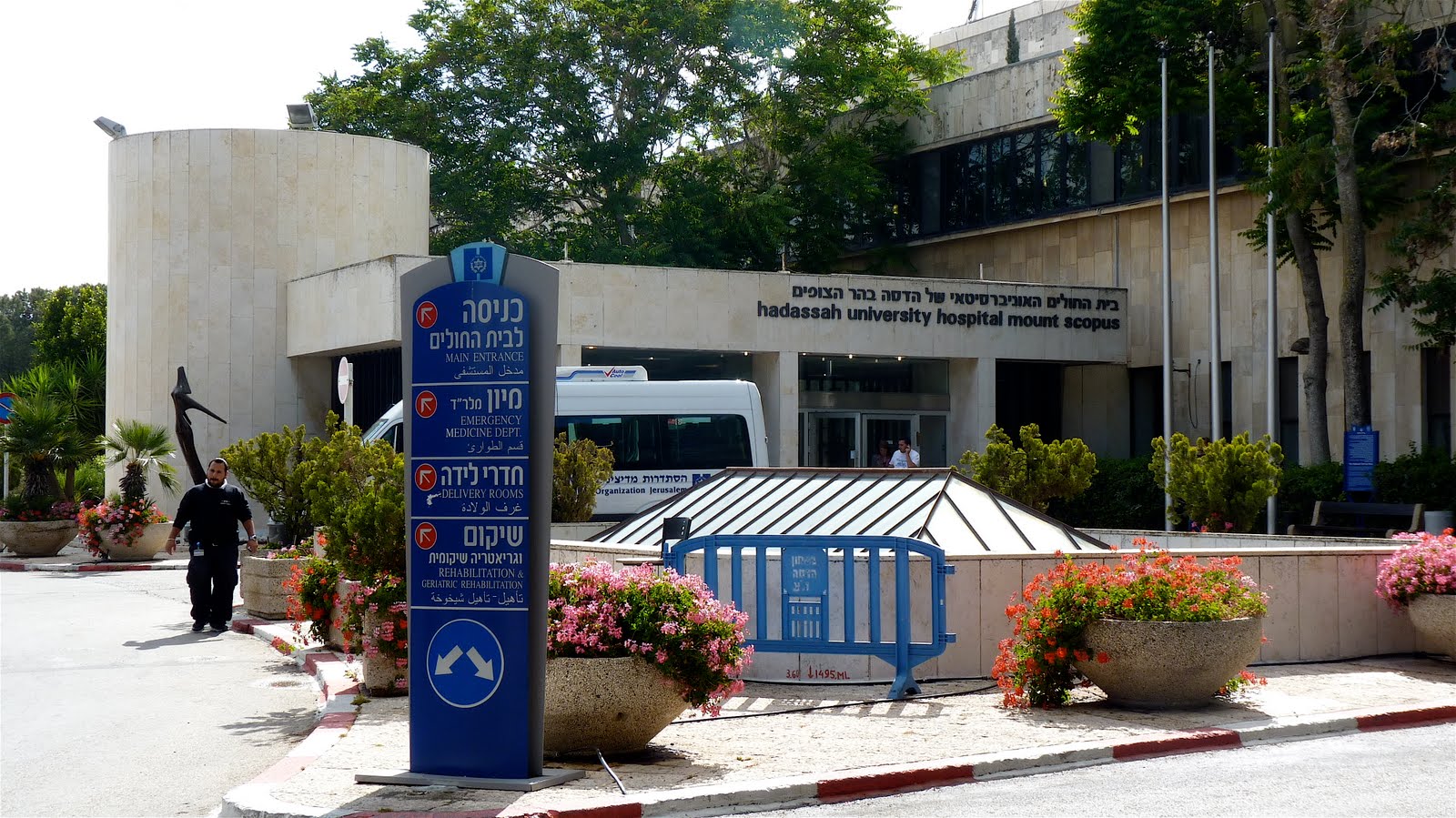


As soon as I got off the bus I thought nice hospital campus, but somehow it just doesn't seem as huge as I was expecting ... and then I realized we were at the wrong place.  We ended up getting back on the #19 going to the complete opposite end of the route and so as a result were of course late for our tour, but I was able to call the lady and explain what happened and she was totally cool about it.  I will now have sympathy for patients' family members who show up an hour late and say "Oh, but I thought she was at the OTHER John Muir..."

For some of the history of both campuses, see http://en.wikipedia.org/wiki/Hadassah_Medical_Center.

Our tour guide Annette was an American expat who's lived in Israel for about 40 years.  She is very proud of the amazing work that Hadassah does.  They really are very ahead of us in a lot of ways such as compassion, stuff provided to patients and families, and awareness of possible upcoming disasters/mass casualties/biological warfare because these issues are so real in Israel.  Another thing that most people probably do not realize is that well over half the care is provided to Arab patients (and on the Mt. Scopus campus, 80%).  First she took us on a tour of the pediatrics area, including pediatric oncology and long term stays.  The place is decorated in a very nonforboding way,


and a place is provided for the parent to stay with the patient (it is expected that they will) and the patients are matched up by parents having the same language in common so they can support each other.  Food is provided free for the patient's family also.  They have very extensive art therapy and also a very major clown program.  I got to meet and talk with one of the clowns, who was originally from France.

They started with 3 clowns and now have over 70 nationwide.  They are the key to distracting the sick kids while they get IVs and such.  They also receive dolls where everything that happens to the patient, they get to sort of reenact on the doll, such as putting in ports.  This takes away a little of their feeling of helplessness and disempowerment.... Additionally they have a school on premises with teachers in both Hebrew and Arabic so that the kids don't fall behind if they are there long term.  All staff is required to be bilingual in Hebrew and Arabic (and English doesn't hurt either, apparently).  Hadassah boasts an 82% cure rate for childhood cancers.  I don't know what the US cure rate is, but I can't imagine it's higher.  

Part of what makes things easier is, of course, that everyone in Israel has health insurance coverage guaranteed to them by the state, unlike the US.  They all belong to one of 4 different Kupat Cholim organizations (like HMOs) and are allowed to change primary MDs and/or health plans every 3 months if they want.  So if someone needs some complicated treatment there aren't massive problems with compliance issues.  And there is no one clogging up the ER due to homelessness, very very few due to drug-seeking behavior, and less for problems that could have been solved as an outpatient.  A pleasure!  I found this out during my tour of the ER where I got to talk with one of the ER doctors who was trained in internal medicine in New York and moved to Israel about 6-8 years ago.  She agreed that there was vastly less ridiculousness to make her job unpleasant -- but she did complain about the salary, which I had no polite way to try to quantify.  What else --they staff very generously so everyone gets seen quickly, workups happen quickly, and no one is super grumpy.  The ER is full of posters about biological warfare and they have regular practice regarding major trauma/terrorism events.  They can very quickly double the bed capacity with equipment that comes out of the ceiling in the waiting area and other things that magically unfold.  The last major thing that happened was a wedding with 250 people where I guess the floor of the building collapsed and they suddenly had all these people rushed in.  That must have been very very vigorous dancing of the hora!

Hadassah has a 700 bed capacity but is already in the middle of constructing a massive new 14 story tower to be finished in 2012 that will supply another 500 beds.  There will be a healing garden on every other floor "because people do better when nature is emphasized" ... and 4 floors that are completely underground including the OR, the doctors' offices, and medical records -- this is in case of war and bombings.  Sad that this kind of thing always has to be taken into account, but that's the reality sometimes of life in this country.  Also sad is that because of this construction, those Marc Chagall stained glass windows in the synagogue have been covered up to protect them!  So we'll have to come back.  We'll add one more thing to the long list of things we missed in Jerusalem, which also includes seeing the underground excavation area with the tunnels under the Old City...

From there we went to Yad VaShem (http://en.wikipedia.org/wiki/Yad_Vashem), the massive Holocaust memorial and museum.  It was really done on a grand scale, which of course helps mirror the hugeness of the atrocities committed.  We spent 3 hours just looking at the exhibits of the major museum.  I was especially captivated by the audiovisual histories of different survivors that were playing (mostly in Hebrew with English subtitles as these are people who had found refuge in Israel after the Holocaust).  We then realized we had finished so late that we missed the accessory museums including artwork by Holocaust survivors, and the outdoor garden area, and a few other things.


That evening we went for Ethiopian food which I thought would be interesting since there is such a sizeable community of Ethiopian immigrants.  The restaurant wasn't that fabulous, but I did enjoy talking to the proprietor in Hebrew about the difference between the injera from Oakland to Jerusalem (he claims more authentic teff comes to Israel from Ethiopia, which is really just a few hours away by plane).

The following day we decided we had not yet overdosed on museums, so we went to the Israel Museum (http://en.wikipedia.org/wiki/Israel_Museum)-- but hadn't realized it is undergoing a massive renovation and will probably be reopening later this year.  It's the largest museum in Israel, but all the art and stuff was off limits.  We were relegated to the Dead Sea Scrolls, housed in an interesting building called the Shrine of the Book which resembles a white Hershey kiss but is actually supposed to simulate what the earthenware pots looked like in which the first 7 scrolls were found. 


I had a nice hour long tour of this exhibit, which was about this weird cultish group called the Essenes who had moved away from Jerusalem in the 2nd century or so, were into ascetism and communal living in the Dead Sea area (somewhere away from Sodom and Gomorrah, I'll have to assume), and wrote these scrolls found at Qumran.  There was also an interesting exhibit on the Song of the Sea (the celebratory song that was sung in the Bible when the Egyptians drowned in the Red Sea) and different audiotaped renditions of it depending on the different cultural origins of the singers.  The other thing that was very interesting (and not off limits) was a reconstruction on a 1:50 scale of Jerusalem during the 2nd Temple Period.


From there we went to another interesting but smaller museum called Ticho House (http://www.english.imjnet.org.il/HTMLs/Ticho_House3.aspx?c0=13392&bsp=12940), an old restored house owned by an opthalmologist and his artist wife, which had art by his wife, his Menorah collection, period furniture and also a modern jewelry exhibit by 4 female artists.  In addition to that, it houses a really lovely restaurant called "Little Jerusalem" where we had a delicious meal.


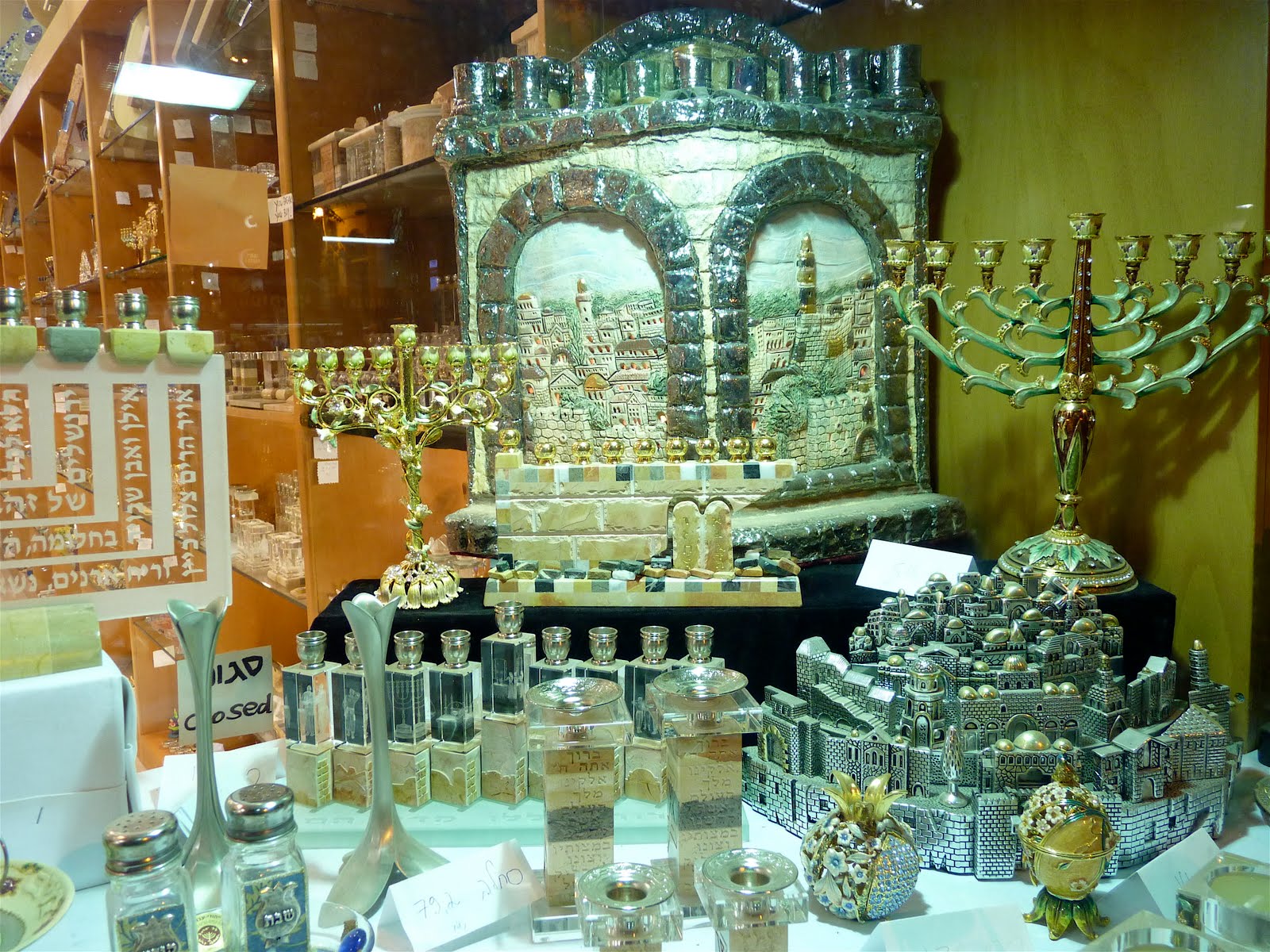
We finished the evening by walking through Ben-Yehudah Street again, the pedestrian mall that was this time beyond full to capacity due to a free concert going on at the end of it.  It turned out my mom was better at pushing through the mosh pit than I was!  Apparently they've been organizing these concerts lately to better serve the "secular" (non-religious) community of young people, which is cool.  This street has tons of all types of stores, but especially features religious paraphernalia (cool stuff like stunning art mezuzot, and less cool stuff like kippot embroidered with the name of one's favorite football team) and somehow we didn't manage to get out of there without buying a few items :)




The next morning we were on our way to the Galilee in the north and Kibbutz Sasa, but not before I got lost getting out of Jerusalem by car (however nowhere near as badly as getting in -- it only involved one or two complete circles around the old city... ;-)

More soon.

Tuesday, May 4, 2010

Jerusalem of Gold, Part 1.

So once we finally found the right place in Jerusalem with my patient and kind host Noa trying to give us directions over the phone, it was beautiful!  She lives in a very central and green/flowery neighborhood named Rechavia in a nice apartment building.  By the way, one thing that is striking about Jerusalem is that you realize that all the buildings are built with the same Jerusalem limestone that the ancient buildings are, too.  This is a city code and it is truly amazing to see the amount of restoration work and rebuilding done in order to make new look old!  Also there doesn't seem to be an economic slump here at all -- construction and life continue unabated.


By the next morning we had recovered from that drive sufficiently to decide that we should take the "99" bus tour of the city -- a circle tour much like the British double-decker buses that hits some of the major points of interest.  We thought it left from one spot which was walkable from Noa's place, but once we got there it turned out that all of Yaffo Street was being dug up and therefore we had to take a bus from there to the Central Bus Terminal (Tachanah Ha-Mercazit).


Wow, it was huge!  3 floors of comings and goings and a ton of military people (really kids because they're all between 18 and 21) floating around, probably on their way home for Shabbat.  Mixed in with very religious people, average people, tourist people, etc., etc.  It made for a very colorful bout of people-watching.  Of course once we got there we found out we had just missed the bus and had to wait about 90 minutes, during which we did more people watching.  I haven't mentioned this before because it is such a normal part of life, but of course whenever you enter a bus terminal, train station, mall (even outdoor pedestrian mall), etc., you have to go through security and often a metal detector.  We got used to these small intrusions pretty quickly and have been fortunate enough to have nothing but a feeling of safety throughout this trip, but it's a constant reminder of the terrorism issues people have suffered through during the Intifadas of the last decade...

Anyway we got on the bus which had headsets through which you could listen in your choice of 8 different languages (but when I turned to the button for English it kept giving me either Hebrew or Spanish -- there's a message to me, I guess).  As soon as we were seated on top of the double decker bus with the open sides for easier photography, the weather turned nasty, cold, windy and occasionally rainy and we thought by the end of that two hour trip that we were going to either a) freeze to death or b) develop pneumonia.  Luckily I can now report 4 days later that neither of those outcomes ended up happening.  We did get a decent overview of the major sites including the Old City, the Mount of Olives, Ein Kerem, the Knesset, some of the major museums I'd driven by the previous day, the hills in the area and the architecture ... but overall I would not really recommend this bus tour unless the weather is stunning and you like overtouristy things.  We later found out that of course almost as much could be accomplished with normal city buses, but you kind of have to know your way around.


The David's Harp bridge was pretty damn cool, an architectural masterpiece:


After all that we walked to the famed Machaneh Yehudah market, or shuk (see http://jerusalem.wikispaces.com/The+Machaneh+Yehudah+Market, http://en.wikipedia.org/wiki/Mahane_Yehuda_Market, and a terrific photo essay at http://www.israelnationalnews.com/News/News.aspx/117142), which was a total frenzy on a Friday afternoon right before Shabbat!  Fabulous produce and all sorts of middle eastern spices and nuts and dried fruits which I took some photos of.  However, the merchants are not the nicest you might encounter.  I asked a guy a question about some dates or raisins and his response (in Hebrew) was something like "Lady, I don't have time, years are passing!"  Another not-nice merchant was the guy who sold chocolate rugelach -- but at least they were delicious!  After all that wandering around the market, naturally one would develop an appetite -- fully satiated at Levi Brothers Falafel, where a huge laffa (suitable for at least 2 people to share) with falafel, your choice of salads, and even fries stuffed in will run you 17 shekels (about $4.50 USD).  We did leave with a smile on our faces...


And then we walked from there around the central neighborhood, into the Ben-Yehudah Street pedestrian mall.  It was kind of a ghost town (because of being pre-Shabbat),


actually we didn't realize how MUCH of a ghost town till we were there several days later in the evening and it was then much like a mosh pit.


We strolled around there and then back to Noa's place in Rechavia.  We rested for a little while and then ventured out again, as a friend of mine named Ronna who I've known through the Internet for at least 5 years but had never met had invited us for Shabbat dinner!  The way the taxi system works in Jerusalem is simply amazing (and the exact inverse of my level of fun driving around Jerusalem) -- either you stand on the street and within a minute a cab stops -- or you call a cab phone number, they tell you they will be there in 5 minutes but are there in 3.  And though I'd read all sorts of crap about how you had to insist they use the meter or they would try to suggest some sort of bogus price for the trip that would always end up being more than the meter -- not a single cabbie in the multiple cab rides we took did NOT automatically put on the meter right away.  They are generally as pleasant as the bus drivers are not.


We had a delightful dinner with Ronna who had all sorts of lovely things prepared for us like stuffed grape leaves, quinoa, salad, chicken, and wine.  And we chatted late into the evening just like old friends who have simply never met face to face before :)

The next day, tired though we were from all the walking of the previous day, we decided to go on the Sandemann's tour of the Old City at 11 am.  For those of you who haven't heard of Sandemann's --check out their web site at http://www.newjerusalemtours.com/ -- they are a group of enthusiastic and inspired young people who do free tours of multiple cities in Europe, and also Jerusalem.  They work for tips, on the philosophy that everyone of any budget should get to enjoy a professionally guided tour of these cities and then if you'd like to tip them, it's up to you.  Our tour guide, Amir, was fantastic, not at all pushy about the tipping thing, and super-knowledgeable.  He's a college student at Hebrew University in Jerusalem studying philosophy and I can't remember what else, but I bet he's a good student.  He was really good at providing fair and balanced info regarding all the world religions and groups that had a piece of Jerusalem's 4000+ year history.


He led us to each of the four quarters of the Old City up and down several billion steps and onto some of the rooftops for spectacular views.  For those of you unfamiliar, the four quarters are the Christian Quarter, the Armenian Quarter, the Jewish Quarter and the Muslim Quarter (which is really a lot bigger than 1/4 of the total, but anyway): here's the Wiki link: http://en.wikipedia.org/wiki/Demographics_of_Jerusalem.  We saw religious types of every type as well as ordinary people, tourists and of course much of it is one huge Arab souk which is really fun to browse all the kinds of stuff for sale there.  We saw lots of Armenian art, various churches including Syrian Orthodox and Ethiopian, we saw the Western Wall (also known as the Wailing Wall because it's the last remaining wall of the 2nd Temple).  Normally it is also like a mosh pit -- but not on Shabbat.  The really religious were mostly busy observing Shabbat elsewhere, so we could get up close and personal with it -- but the only downside was no photography was allowed on Shabbat.

We placed little notes with wishes and requests into the crevices as there's a belief that your prayers will be answered ... this has been done traditionally throughout the years, but apparently now you can also send an email to the Chief Rabbi who will then have it placed for you.  (This stuff is vaguely akin to kids writing Santa in the commercialized Christian religion about what their wish-list is.)  Per the tour leader who was very funny, apparently Obama placed a folded up wish into the wall shortly before his election, so who knows how powerful it is ... and also he told us a story about what happens to the old notes, why is there always room to shove more in there?  Apparently once a month someone goes around at night and collects all the notes and then buries them somewhere in the ground to make room for the new ones.  Who knows if that's true?

Amir was really funny and informative and gave us more than 3 hours of his time and we ended up giving him a nice tip and I hope most of the other people did too.  Most of them were from other countries, many non-primarily-English-speaking.  Anyway, I would recommend this tour 10x more than the #99 bus!

Once again we were hungry after walking, so we went back in through the Jaffa Gate and walked almost all the way to the Damascus Gate (the mostly Muslim Quarter).  On Via Dolorosa (somewhere near one of those stations of the cross) is an absolute gem called Hummus Lina.  I'd read about this place on Chowhound as possibly the best Hummus place in the old city (and there is lots of competition!) and I think they may have been right.  We ordered hummus with pine nuts, and Arabic salad with labneh with mint, and yummy yummy pita bread.  And fresh squeezed grapefruit juice, a whole jug of it.  This was one of the least expensive meals we have had this trip, and at the same time one of the best!  The contented sighs coming from our table were a fitting end to an exhausting day.  Here is someone else's obsessive rave review of this place, with photos: http://humus101.com/EN/2007/07/16/old-jerusalem-part-ii-hummus-lina/.  Enjoy :)

That night it was Lag BaOmer, a Jewish holiday with Kabbalistic significance which celebrates the end of a plague and involves lots of bonfires ... for more info see http://en.wikipedia.org/wiki/Lag_Ba-Omer.  Unfortunately we were so tired and I had a migraine that we kind of missed going out to see the bonfires. But I'm sure they were fab.

More Jerusalem tidbits, to be continued in Part 2.